

ఒక engineering బృందం కొత్త model గురించి చూస్తుంది. దాని weights అందుబాటులో ఉన్నాయి. Context window పెద్దది. Benchmark ఫలితాలు కూడా బలంగా కనిపిస్తున్నాయి. వెంటనే ఒక ఆలోచన వస్తుంది: దీనిని private గా run చేసి, API ఖర్చు తగ్గించి, పెద్ద US model provider పై ఆధారాన్ని తగ్గించవచ్చేమో.
ఆ నిర్ణయం సరైనదై ఉండవచ్చు. కానీ అది ఆటోమేటిక్గా నిజం కాదు.
DeepSeek V4.1 Flash, Z.ai GLM 5.3 family, Moonshot AI Kimi K3 వల్ల Chinese labs open-weight AI లో ఎంత వేగంగా ముందుకు వస్తున్నాయో తెలుస్తోంది. అదే సమయంలో model announcements తరచుగా దాచే ఒక అంతరాన్ని కూడా ఇవి చూపిస్తున్నాయి. ఒక model ను download చేయగలగడం, దాన్ని సురక్షితంగా, తక్కువ ఖర్చుతో, నమ్మదగిన విధంగా operate చేయగలగడం ఒకటి కాదు.
Open weight అంటే open source అని కాదు
Open-weight model తన training తర్వాత ఏర్పడిన parameters ను download చేసుకునేలా అందిస్తుంది. దీని వల్ల ప్రతి request ను developer API కు పంపకుండా model ను పరిశీలించడం, మార్చడం, స్వంత infrastructure లో host చేయడం సాధ్యమవుతుంది.
కానీ పూర్తి training data, training code, training process అన్నీ అందుబాటులో ఉంటాయని దీని అర్థం కాదు. Commercial use పై ఎలాంటి పరిమితులు ఉండవని కూడా కాదు. ప్రతి model కు తన licence మరియు usage conditions ఉంటాయి.
ఈ models విషయంలో ఆ తేడా ముఖ్యమైనది. DeepSeek V4.1 Flash checkpoints మరియు technical details ను ప్రచురించింది.[1] Z.ai GLM 5.3, GLM 5.3 Flash weights ను విడుదల చేసింది.[3] Moonshot తన model licence కింద Kimi K3 weights ను అందించింది.[5] ఒక బృందం ఉపయోగించాలనుకునే exact version పై procurement లేదా legal review తప్పనిసరి.
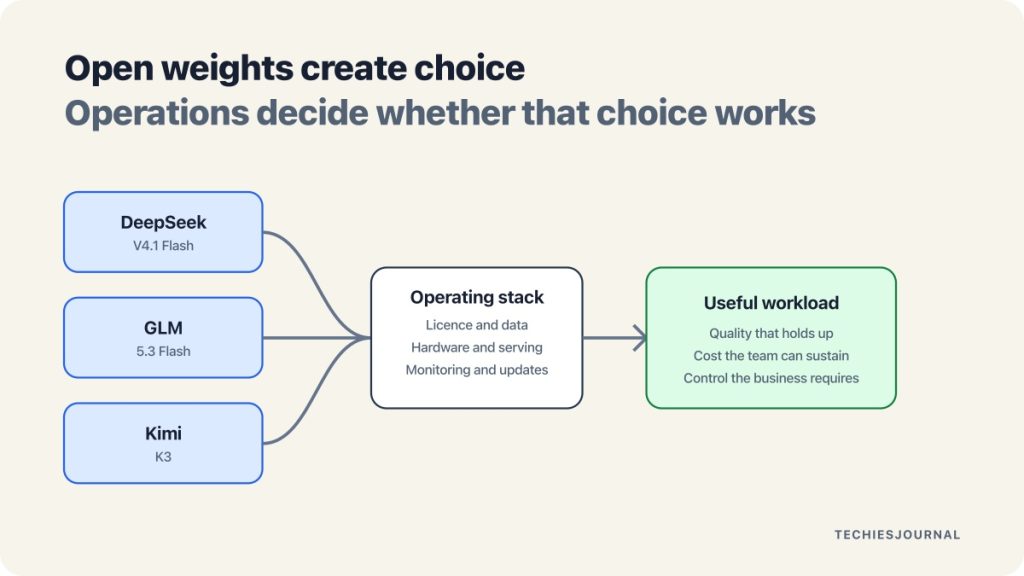
చిత్రం 1 కోసం టెక్స్ట్ వివరణ
ప్రచురించిన మోడల్ వెయిట్స్ ఉపయోగకరమైన AI సర్వీస్గా మారడానికి ముందు లైసెన్స్ సమీక్ష, infrastructure, ఇన్ఫరెన్స్ సర్వింగ్, గవర్నెన్స్, వర్క్లోడ్ మూల్యాంకనం అవసరమని ఆరు లేయర్ల స్టాక్ చూపిస్తుంది.
మూడు models, మూడు వేర్వేరు operating ప్రశ్నలు
Headline features అన్నీ ఒకే business ప్రశ్నకు సమాధానం ఇవ్వవు.
| Model | Documented design signal | బృందం అడగాల్సిన ప్రశ్న |
|---|---|---|
| DeepSeek V4.1 Flash | 552 billion backbone parameters. Decoding సమయంలో 16 billion, prompt processing సమయంలో 8 billion parameters active అవుతాయి. One million tokens వరకు support చేస్తుంది. | Long, input-heavy agent workloads లో compressed context design serving cost తగ్గించగలదా? |
| GLM 5.3 Flash | 320 billion total parameters, 18 billion active parameters. Native multimodal support, efficiency కోసం hybrid attention design. | పెద్ద GLM 5.3 అవసరం లేకుండా faster model coding, multimodal అవసరాలను తీర్చగలదా? |
| Kimi K3 | 2.8 trillion parameter multimodal model. One-million-token context window, published weights ఉన్నాయి. | దీని capability చాలా పెద్ద hosting, operational footprint కు తగిన విలువ ఇస్తుందా? |
ఇవి vendor documentation లోని specifications. ఒక model ఎప్పుడూ ఉత్తమమని ఇవి నిరూపించవు. Provider, reasoning setting, quantisation method, evaluation harness మారితే independent test ఫలితాలు కూడా మారుతాయి.[7] Leaderboard rank evaluation ను ప్రారంభించవచ్చు. కానీ అదే చివరి నిర్ణయం కాకూడదు.
Mixture of experts compute తగ్గించవచ్చు, model storage ను కాదు
ఈ మూడు model families mixture-of-experts, లేదా MoE, design ను ఉపయోగిస్తాయి. ప్రతి token కోసం అన్ని parameters ను ఉపయోగించకుండా network లోని ఒక భాగాన్ని మాత్రమే activate చేస్తాయి.
దీంతో ప్రతి response కు అవసరమైన computation తగ్గవచ్చు. కానీ inactive weights మాయమవవు. చాలా పెద్ద model ను GPU memory, host memory, storage మధ్య load చేసి తరలించాల్సిందే.
అందుకే active-parameter సంఖ్యను ఒంటరిగా చూడటం తప్పుదారి పట్టించవచ్చు. 16 billion parameters మాత్రమే active అయినా, మొత్తం వందల billion parameters ను load చేసి coordinate చేయాల్సి రావచ్చు. Network links, memory bandwidth, inference kernels, cache management, parallel serving కూడా అసలు product లో భాగమవుతాయి.
ఇవి సాధారణ laptop models కావు. చిన్న quantised versions రావచ్చు. కానీ community quantised build ను వేరే artefact గా evaluate చేయాలి. అది vendor hosted model లాగే ప్రవర్తిస్తుందని భావించకూడదు.
Long context అంటే capacity, తప్పనిసరిగా understanding కాదు
One-million-token context windows ఇప్పుడు ఈ పోటీలో ముఖ్యమైన అంశం. Large codebases, document collections, long agent sessions కు ఇవి ఉపయోగపడవచ్చు.
కానీ context capacity ఎక్కువగా ఉండటం వల్ల model సరైన detail ను తప్పకుండా కనుగొంటుందని, instructions ను నిలబెట్టుకుంటుందని, మొత్తం window పై consistent reasoning చేస్తుందని నిరూపించదు. Longer prompts processing time, cache requirements, cost ను కూడా పెంచుతాయి.
DeepSeek V4.1 Flash ఈ operating problem ను నేరుగా address చేయడం వల్ల technically interesting గా ఉంది.[1] Input-heavy workloads కోసం compressed attention, smaller key-value caches ను దాని paper వివరిస్తుంది. ఇది నిజమైన bottleneck కు architectural response. అయినప్పటికీ బృందం తన data తో retrieval accuracy, time to first token, end-to-end task completion ను test చేయాలి.
API ధర, self-hosting ఖర్చు ఒకే calculation కాదు
Low API price ను పోల్చడం సులభం. Self-hosting ఖర్చు GPUs, power, engineering time, monitoring, security, upgrades, spare capacity అంతటా విస్తరిస్తుంది.
Predictable demand ఉన్న busy service dedicated infrastructure ను సమర్థించవచ్చు. Irregular traffic ఉన్న చిన్న బృందం API calls కంటే idle GPUs కోసం ఎక్కువ చెల్లించే అవకాశం ఉంది. Privacy, data location, customisation, provider independence ముఖ్యమైతే hosting సరైన ఎంపికగా ఉండవచ్చు.
అందుకే comparison cost per token పై కాకుండా cost per successful task పై ఉండాలి. ఎక్కువ retries అవసరమయ్యే, పొడవైన answers ఇచ్చే, tool calls లో విఫలమయ్యే cheaper model మొత్తం workflow లో ఎక్కువ ఖర్చు కావచ్చు.
ఉపయోగకరమైన evaluation order
Hardware కొనడం ద్వారా ప్రారంభించవద్దు. Workload తో ప్రారంభించండి.
- సాధారణ పని, difficult edge cases ను చూపే ఇరవై నుంచి యాభై real tasks ఎంచుకోండి.
- Private cluster నిర్మించే ముందు hosted model లేదా trusted inference provider ను test చేయండి.
- Task success, latency, tool-use reliability, output length, human correction time ను కొలవండి.
- Model licence, data path, logging policy, regional requirements ను review చేయండి.
- Realistic utilisation, redundancy, engineering support తో self-hosting ఖర్చు అంచనా వేయండి.
- API route పరిష్కరించలేని requirement ఉన్నప్పుడే private hosting pilot ప్రారంభించండి.
చాలా బృందాలకు తక్షణ పాఠం DeepSeek, GLM లేదా Kimi ను తప్పకుండా self-host చేయాలనేది కాదు. ఇప్పుడు evaluate చేయడానికి మరిన్ని credible models ఉన్నాయి. AI work ఎలా deliver చేయాలో ఎంచుకునేటప్పుడు bargaining power కూడా పెరుగుతోంది.
Chinese open-weight model race ఎంపికను విస్తరిస్తోంది. Enterprise కు సరైన model అతిపెద్ద parameter count లేదా బలమైన launch chart కలిగినది కాదు. బృందం cost, control, operational limits లో అవసరమైన పనిని పూర్తి చేసేది సరైన model.
References and further reading
- DeepSeek V4.1 Flash technical paper, DeepSeek AI, September 2026. Architecture, context, cache-compression వివరాలు. ↩
- DeepSeek V4.1 Flash model repository, DeepSeek AI. Checkpoints, model card, licence. ↩
- GLM 5.3 release, Z.ai, August 2026. Model మరియు intended workloads పై vendor explanation. ↩
- GLM 5.3 Flash release, Z.ai, August 2026. Smaller active model architecture, efficiency claims. ↩
- Kimi K3 technical article, Moonshot AI, July 2026. Model design, evaluations, release context. ↩
- Kimi K3 model repository, Moonshot AI. Published weights, model card, licence. ↩
- Kimi K3 independent model analysis, Artificial Analysis. Provider, performance, cost comparisons. ↩