

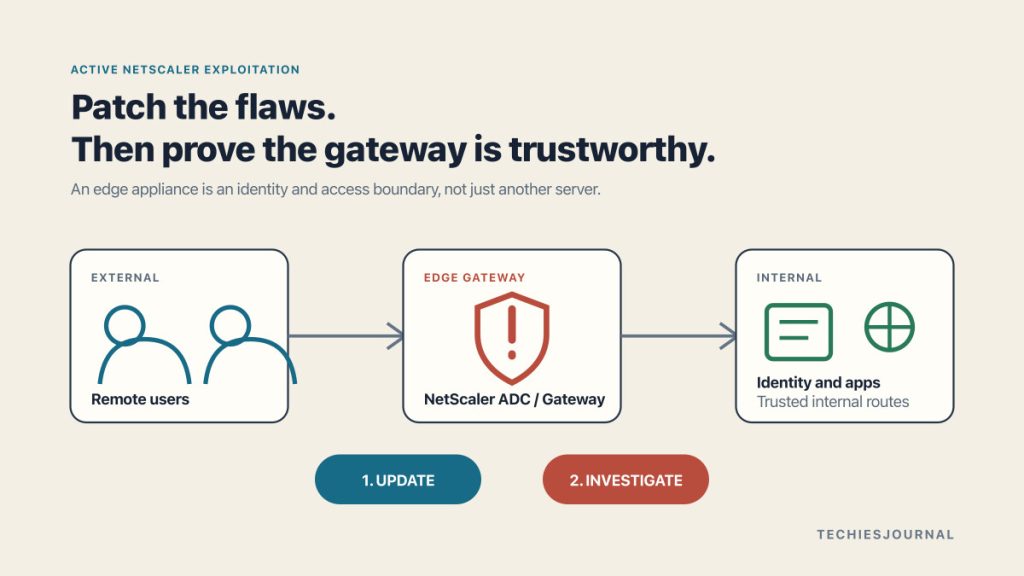
NetScaler appliance అనేది patch queue లో ఉన్న మరో system లాగా కనిపించవచ్చు. కానీ చాలా సంస్థల్లో దాని పాత్ర అంతకంటే ముఖ్యమైనది. అది remote-access sessions ను ముగించగలదు, applications ను బయటకు అందుబాటులో ఉంచగలదు, authentication paths ను అమలు చేయగలదు, external users ను internal services తో కలపగలదు.
అందుకే కొత్తగా వెల్లడైన CVE-2026-88771 మరియు CVE-2026-88772 అనే రెండు vulnerabilities కు సాధారణ update కంటే ఎక్కువ స్పందన అవసరం. Mitigation చేయని systems పై exploitation జరిగినట్లు Citrix ధృవీకరించింది.[1] Threat actors ఈ రెండు vulnerabilities ను ప్రపంచవ్యాప్తంగా exploit చేస్తున్నారని CISA తెలిపింది. వాటిని Known Exploited Vulnerabilities catalog లో కూడా చేర్చింది.[2]
ప్రభావిత appliances ను update చేయడం తక్షణ పని. కానీ బయటకు అందుబాటులో ఉన్న appliance ఇప్పటికే compromise అయిందా లేదా నిర్ణయించడం మరింత కష్టమైన పని.
Configuration వివరాలు ఎందుకు ముఖ్యమైనవి?
రెండు vulnerabilities కూడా authentication లేకుండానే remote code execution కు అవకాశం ఇవ్వగలవు. అయితే అవి exposed అయ్యే పరిస్థితులు వేరు.
| Vulnerability | Exposure condition | ఎందుకు ముఖ్యమైనది? |
|---|---|---|
| CVE-2026-88771 | Vulnerable customer-managed NetScaler ADC మరియు Gateway deployments అన్నింటినీ ప్రభావితం చేస్తుంది. అదనపు feature అవసరం లేదు. | Optional services ను off లో ఉంచినంత మాత్రాన default installation రక్షణలో ఉండదు. |
| CVE-2026-88772 | DTLS అవసరం. VPN virtual server పై ప్రత్యేకంగా disable చేయకపోతే DTLS default గా enabled ఉంటుంది. | Administrator ఉద్దేశపూర్వకంగా enable చేయకపోయినా, సాధారణ remote-access configuration vulnerable condition ను కలిగి ఉండవచ్చు. |
Citrix రెండు flaws కు CVSS 4.0 ప్రకారం 9.5 rating ఇచ్చింది. CVE-2026-88771 కు attack complexity తక్కువగా ఉంటుంది, కానీ అదనపు attack precondition ఉంది. CVE-2026-88772 కు attack complexity ఎక్కువ. అయినా DTLS enabled ఉన్నప్పుడు ఇది remote code execution లేదా denial of service కు దారితీయవచ్చు.
ఈ వివరాలు రెండు ప్రమాదకరమైన assumptions ను నివారించాలి. Default configuration సురక్షితం అని team భావించకూడదు. అలాగే DTLS ను ఎవరూ enable చేసినట్లు గుర్తులేదనే కారణంతో అది off లో ఉందని అనుకోకూడదు.
ఏ versions కు తక్షణ శ్రద్ధ అవసరం?
Citrix ప్రకారం ఈ customer-managed versions ప్రభావితమయ్యాయి:[1]
- 14.1-73.37 కంటే ముందున్న NetScaler ADC మరియు NetScaler Gateway 14.1
- 13.1-64.23 కంటే ముందున్న NetScaler ADC మరియు NetScaler Gateway 13.1
- 14.1-73.37 FIPS కంటే ముందున్న NetScaler ADC 14.1-FIPS
- 13.1-37.279 కంటే ముందున్న NetScaler ADC 13.1-FIPS మరియు 13.1-NDcPP
NetScaler instances ఉపయోగించే Secure Private Access Hybrid deployments కూడా ప్రభావితమవుతాయి. Citrix-managed cloud services ను vendor update చేస్తుంది. కానీ customer-managed appliances బాధ్యత customer దే.
అందువల్ల version inventory లో production systems మాత్రమే కాకుండా disaster-recovery, test, standby appliances కూడా ఉండాలి. Inactive node reachable గా ఉన్నా, update లేకుండా తరువాత service లోకి వచ్చినా సమస్య కావచ్చు.
Patching మరియు compromise assessment రెండు వేరు పనులు
Fixed build install చేయడం వల్ల తెలిసిన vulnerabilities ద్వారా కొనసాగుతున్న exploitation ఆగుతుంది. కానీ attacker ఇప్పటికే ఏర్పాటు చేసిన persistence ను అది తొలగించదు.
CERT-EU వివరించిన activity లో logs ద్వారా commands inject చేయడం, appliance web-server configuration మార్చడం, internet నుంచి చేరగల PHP web shell install చేయడం ఉన్నాయి.[3] సాధ్యమైనప్పుడు patching కు ముందు compromise indications ను పరిశీలించాలని CISA సూచిస్తుంది. Updates apply చేసిన తరువాత forensic visibility తగ్గవచ్చు.[2]
అందువల్ల స్పందన క్రమం ఇలా ఉండాలి:
- ఏ appliances మరియు versions exposed అయ్యాయో నిర్ధారించండి.
- Operations అనుమతించిన చోట vulnerable systems ను restrict చేయండి లేదా isolate చేయండి.
- మార్పులు చేసే ముందు evidence ను preserve చేయండి.
- అందుబాటులో ఉన్న indicators ను పరిశీలించి suspicious activity కోసం hunt చేయండి.
- Supported update ను apply చేయండి.
- Appliance ను ఇంకా నమ్మవచ్చా, లేక rebuild చేసి credentials recover చేయాలా నిర్ణయించండి.
చిత్రం 1 కోసం టెక్స్ట్ వివరణ
ఐదు దశల NetScaler incident response sequence: 1. వెర్షన్ మరియు ఎక్స్పోజర్ ఇన్వెంటరీ, 2. మార్పులు చేసే ముందు కంటైన్ చేయడం మరియు సాక్ష్యాలను భద్రపరచడం, 3. ఇండికేటర్లు, లాగ్లు మరియు యాక్సెస్ దర్యాప్తు, 4. తెలిసిన లోపాలను మూసివేయడానికి ఫిక్స్డ్ బిల్డ్ వర్తింపజేయడం, 5. ఉపకరణాన్ని నిలుపుకోవాలా లేదా రీబిల్డ్ చేయాలా అనే ట్రస్ట్ నిర్ణయం. ప్యాచ్ ఇన్స్టాల్ చేయడంతోనే ఆగవద్దని కింది గమనిక గుర్తుచేస్తుంది.
Appliance snapshots, remote syslog data, NetScaler Console logs, technical support bundles, packet-engine core dumps ను preserve చేయాలని Unit 42 సూచిస్తుంది.[4] Suspicious administrative sessions, అనూహ్య outbound connections, కారణం తెలియని logging gaps కోసం కూడా పరిశీలించాలని చెబుతుంది. Patching వల్ల attacker ఇప్పటికే పొందిన access తొలగిపోదని ఆ సంస్థ స్పష్టంగా హెచ్చరిస్తుంది.
ప్రతి సంస్థలో ఇలాంటి నిర్ణయం తీసుకునేంత internal forensic expertise ఉండకపోవచ్చు. Evidence లేకపోతే, logs లో gaps ఉంటే లేదా persistence పై అనుమానం ఉంటే, version number మారిందనే కారణంతో recovery పూర్తయిందని చెప్పడం కంటే incident-response team ను సంప్రదించడం సురక్షితం.
Exposure ఎంత పెద్దది?
September 27 telemetry ఆధారంగా potentially vulnerable గా ఉండగల 50,277 internet-exposed instances ను గుర్తించినట్లు Unit 42 తెలిపింది.[4] ఇది compromised systems సంఖ్య కాదు. ఇది external exposure estimate మాత్రమే. అలాగే పరిగణించాలి.
అయినా ఈ సంఖ్య urgency ను వివరిస్తుంది. Edge appliances నిరంతరం scan అవుతుంటాయి. Working exploitation అనేది enterprise change windows కంటే వేగంగా విస్తరించవచ్చు. తన appliance ను target చేసిన evidence కోసం ఎదురుచూడకుండా organisation exposure ను తగ్గించాలి.
Teams ఈరోజే ఏమి చేయాలి?
Infrastructure, network, security teams వేర్వేరు patch మరియు investigation పనులు చేయకుండా ఒకే shared inventory నుంచి పని చేయాలి.
- ప్రతి customer-managed NetScaler ADC మరియు Gateway instance ను గుర్తించండి.
- Version, internet exposure, role, HA relationship, management owner ను నమోదు చేయండి.
- VPN virtual servers పై DTLS enabled గా ఉందా లేదా implicit గా active లో ఉందా తనిఖీ చేయండి.
- Operations పరంగా సాధ్యమైనప్పుడు update కు ముందు relevant evidence ను preserve చేయండి.
- Fixed Citrix build ను emergency basis పై apply చేయండి.[5]
- Citrix, CISA మరియు trusted threat-research indicators ను పరిశీలించండి.
- Compromise అనుమానం ఉంటే appliance ద్వారా వెళ్లి ఉండగల credentials మరియు secrets ను rotate చేయండి.
- Recovery తరువాత authentication, VPN, application delivery, monitoring ను validate చేయండి.
చివరి దశ “patch విజయవంతంగా install అయింది” అనే వాక్యంతో ముగియకూడదు. “Service restore అయింది, exposure మూసివేశాం, appliance ను నమ్మేందుకు సరిపడ evidence ఉంది లేదా దాన్ని replace చేశాం” అనే స్థితికి చేరాలి.
NetScaler users మరియు ముఖ్యమైన systems మధ్య boundary లో ఉంటుంది. ఆ boundary దాటిపోయి ఉండవచ్చని అనుమానం ఉన్నప్పుడు patching అవసరం. Recovery కు వేరే judgement అవసరం.
References and further reading
- NetScaler security bulletin CTX697096, Citrix, September 2026. ప్రభావిత versions, exposure conditions, fixed builds. ↩
- Critical NetScaler zero-days exploited, CISA, September 27, 2026. Global exploitation, KEV status, evidence-preservation guidance. ↩
- CVE-2026-88771 technical investigation, CERT-EU, September 28, 2026. Observed log injection and web-shell persistence. ↩
- NetScaler zero-day threat brief, Palo Alto Networks Unit 42, September 27, 2026. Exposure telemetry and investigation guidance. ↩
- Rapid7 NetScaler zero-day guidance, Rapid7, updated September 29, 2026. Emergency remediation and detection guidance. ↩