

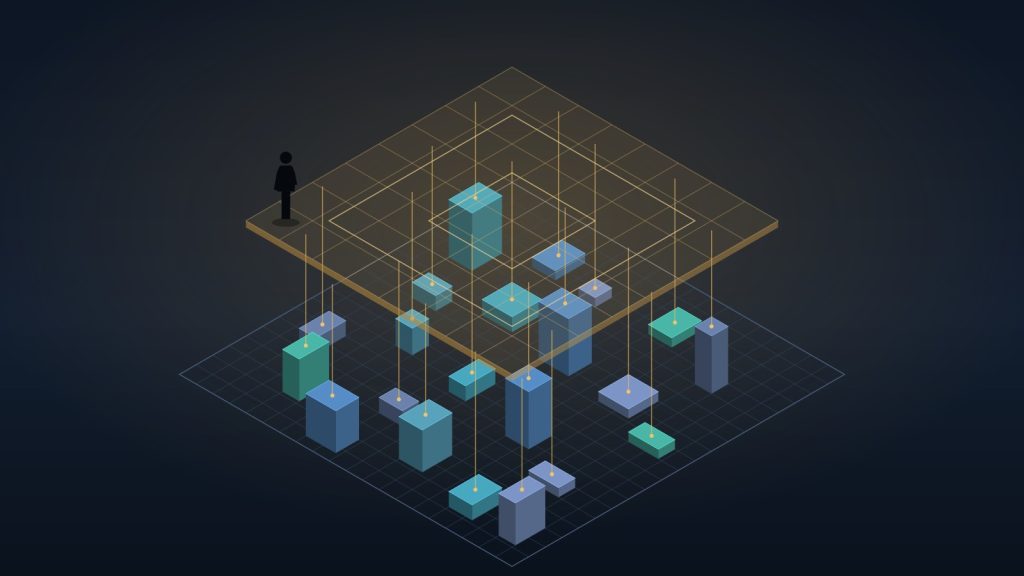
AI agents are becoming more capable.
They can read code, search company systems, call APIs, run tools and work for long periods without someone guiding every step.
That creates a new question:
If companies eventually run hundreds or thousands of agents, what manages the agents themselves?
OpenClaw Enterprise is one early attempt to answer that question.
Announced on September 29, OpenClaw Enterprise, or OCE, is an open-source platform for deploying and managing persistent AI agents inside organizations.
OpenClaw describes it as a control plane for agents.
The project sometimes compares the idea to “Kubernetes for agents.” That is still an ambition rather than a proven industry role, but the underlying problem is real.
The problem changes inside an enterprise
A personal agent usually operates for one trusted user.
An enterprise may eventually run many agents across software development, IT, security, finance, support and other teams.
Each agent may need different access.
One might read source code but should never see payroll data. Another may inspect production logs but should not deploy software.
The question therefore changes from:
How do we build an agent?
to:
How do we operate many powerful agents without giving each one uncontrolled access?
That is the control-plane problem.
What does an agent control plane do?
OpenClaw Enterprise separates management from execution, as its architecture documentation describes.
Its control plane manages areas such as:
- agent definitions
- identity and authorization
- namespaces
- configurations and secrets
- deployment revisions
- lifecycle
- audit
The actual agent work happens separately in the data plane.
In simple terms:
Control plane: what should run, with which configuration and permissions.
Data plane: the agent actually uses models and tools to do the work.
This is a familiar infrastructure pattern applied to agentic systems.
Accessible text alternative for this figure
A stack of four labelled layers. At the top, operators and platform teams. Below them, the agent control plane, which handles identity, permissions, configuration, lifecycle, deployment and audit. Below that, agent runtimes and sandboxes, where the agents run. At the bottom, the enterprise systems and tools the agents use, such as repositories, databases, cloud and internal applications. Operators define and govern through the control plane, which deploys, configures and authorizes the runtimes. The agents act on enterprise systems from the runtime layer. The control plane layer is marked as the control plane and the runtime layer as the data plane, and every layer carries a text label, so no meaning depends on colour.
Why an agent framework is not enough
Agent frameworks already help developers with:
- tool calling
- workflows
- memory
- state
- model access
But an enterprise also needs answers to questions such as:
- Who can deploy this agent?
- What systems can it access?
- Which credentials does it receive?
- Can another team use it?
- Can its permissions be revoked?
- Can administrators see what changed?
- Can the company reconstruct what happened later?
Those are platform and governance questions.
OpenClaw Enterprise is trying to bring them into one management layer.
If you are still at the stage of building a first agent, our Perspective on moving from your first agent to a reliable system covers the step before this one.
A real example: an agent with serious access
OpenClaw says OpenAI is piloting OCE internally.
One example is an agent called Androidclaw, which reportedly has access to engineering systems including Git, GitHub, logs and internal information.
It can investigate broken builds, find relevant pull requests and help prepare fixes.
That shows why governance matters.
An agent with enough access to repair software can be extremely useful.
It can also become a significant security boundary.
The important question is no longer only whether the model is capable.
It is:
What infrastructure controls what that intelligence is allowed to touch?
From one trusted user to many trust boundaries
The original OpenClaw model largely assumes one trusted operator.
That is reasonable for a personal agent.
It is not enough for an organization where teams and workloads should remain separated. Gartner’s earlier assessment of personal OpenClaw use is useful context for why stronger boundaries are needed.
OCE introduces explicit namespaces and authorization boundaries around agents, configurations and credentials.
Its Kubernetes architecture can also separate different agent components using distinct identities, storage and service accounts.
This is more than adding login and RBAC.
It changes the trust model.
Identity must live outside the model
OCE checks authorization against the requested action, resource and namespace, as its security policy sets out.
That matters because agents may be able to perform many actions across several systems.
A reliable enterprise design cannot depend on an instruction such as:
Please do not access anything sensitive.
Permissions must exist outside the model.
This connects with a broader principle we have discussed before on TechiesJournal:
AI agents need bounded authority, not simply shared credentials.
A control plane is one place where those boundaries can be managed consistently.
Vendor neutrality is also important
OCE is designed so organizations can replace parts of the underlying stack, including the model, agent harness and sandbox.
In principle, that could allow different agents to use different models or runtimes while remaining under one governance layer.
For example:
OpenAI for one workload
Anthropic for another
a local model for sensitive work
while identity, lifecycle and policy remain managed centrally.
That is still an early direction, but it is strategically important.
It suggests that the management layer for agents does not necessarily have to belong to the model provider.
What is actually ready today?
This is where the announcement needs qualification.
OpenClaw recommends the current release for internal pilot workloads while it moves toward version 1.0.
Several major components are implemented:
| Area | Status |
|---|---|
| API and management console | Implemented |
| Durable controller worker | Implemented |
| PostgreSQL platform state | Implemented |
| Kubernetes packaging | Implemented |
| Namespace/resource authorization | Implemented |
| Secret bindings | Implemented |
| Immutable agent revisions | Implemented |
But other controls remain incomplete or planned:
| Area | Status |
|---|---|
| Workload authentication to the control plane | Planned |
| General credential-free model inference | Planned |
| Full model mediation | Incomplete |
| Stronger workload transport security | Incomplete |
| Broader policy enforcement | Still evolving |
That distinction matters.
OpenClaw Enterprise should not yet be described as a finished solution to enterprise-agent security.
It is better understood as an early implementation of the layer such systems may need.
Why this matters beyond OpenClaw
Red Hat, which is contributing to OCE, describes an open agent control plane as an emerging part of the enterprise AI stack.
That broader idea is more important than this single product.
The industry has spent enormous effort improving the intelligence inside agents.
Enterprise adoption may increasingly depend on the infrastructure around them:
- identity
- isolation
- lifecycle
- deployment
- observability
- audit
- policy
Persistent agents are starting to look less like chatbots and more like infrastructure workloads.
That means they may need infrastructure-style management.
My Perspective: capability is no longer the only problem
The first stage of agent development focused on capability.
Can the agent use a browser?
Can it write code?
Can it call an API?
Can it complete a multi-step task?
Enterprise systems eventually ask different questions:
Who owns it?
What can it access?
Where does it run?
Which version is deployed?
Who can stop it?
Can we reconstruct what it did?
That is why the control-plane idea matters even if OpenClaw Enterprise itself is still early.
The enterprise-agent problem is no longer only how to make an agent capable.
It is how to operate many capable agents without turning each one into an unmanaged privileged workload.
Whether OpenClaw Enterprise becomes an industry standard is unknown.
The need for the layer it is trying to build is becoming much harder to ignore.
Sources and Further Reading
Source review: 2 October 2026.
- OpenClaw — OpenClaw Enterprise: The Open Agent Platform. Official announcement covering the project’s purpose, origins, collaborators and current maturity.
- OpenClaw Enterprise — Architecture. Technical documentation for the control plane, tenancy, execution model and remaining design work.
- OpenClaw Enterprise — Security Policy. Security boundaries around identity, credentials, deployments and tenant isolation.
- Red Hat — Why Red Hat Is Building an Open Foundation for Enterprise Agents with OpenClaw Enterprise. Red Hat’s view of agent control planes as an emerging infrastructure layer.
- Gartner — First Take: OpenClaw: Agentic Productivity Comes With Unacceptable Cybersecurity Risk. Earlier security assessment of the personal-agent model that provides context for why stronger governance boundaries are needed.